Nordstone Team
Professional Writers
Engineering Innovation & Supply Chain Transformation in Pressure Equipment Manufacturing
Beyond market growth and code updates, the pressure vessel and heat exchanger industry is undergoing a deeper transformation—driven by advanced design methods, additive manufacturing, and sustainability-focused supply chains.
Advanced Engineering & Design Innovations
Additive Manufacturing (AM) in Heat Exchangers
- AM is emerging as a game-changer for compact heat exchanger design.
- Advanced lattice structures and optimized material morphology enable:
- Higher heat transfer performance
- Reduced weight
- Lower material consumption
These innovations are especially relevant in high-performance and space-constrained applications.
Precision Design Optimization
- New research is improving pressure-retaining joint reliability.
- Examples include:
- Optimized bolt tightening sequences for ring joints
- Reduced leakage risks
- Improved long-term structural integrity
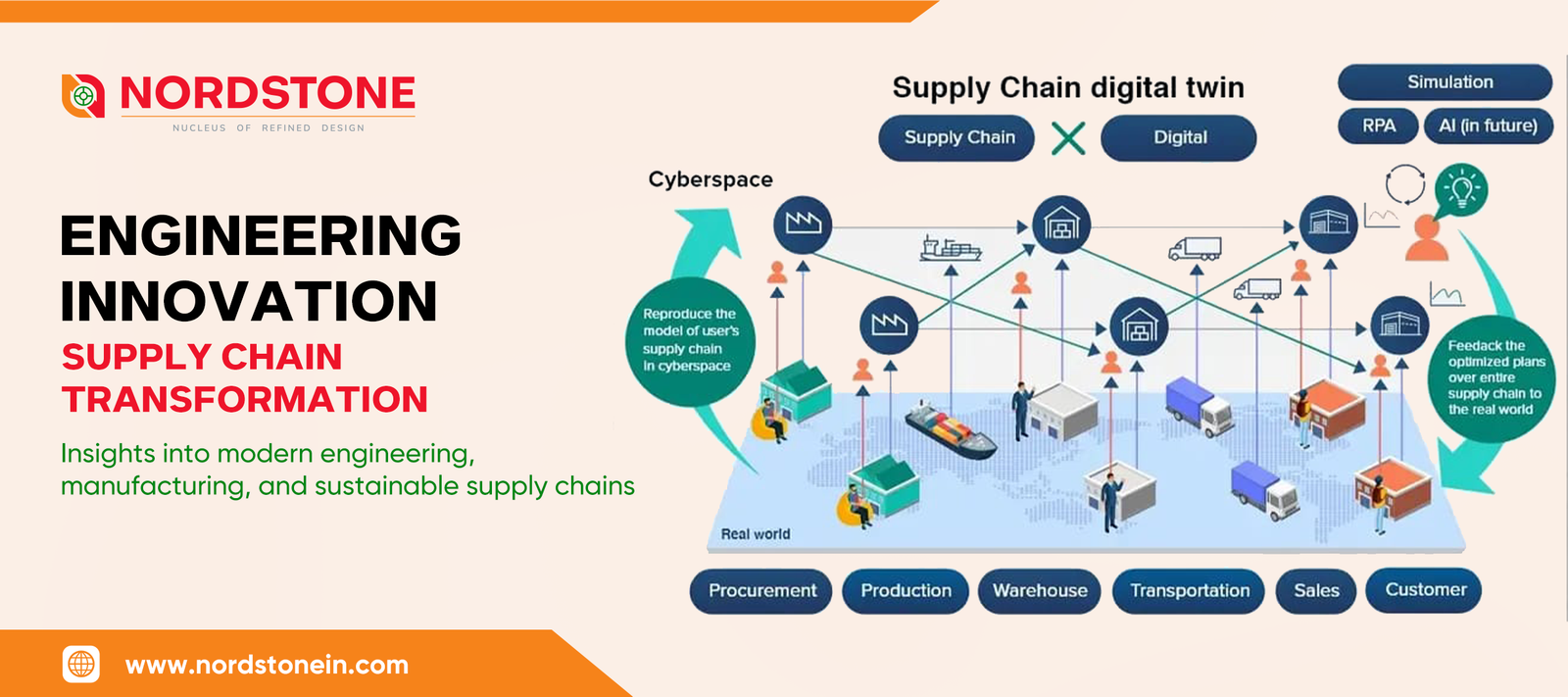
Supply Chain Evolution & Sustainability
The industry is also responding to broader global priorities:
- Increased focus on supply chain resilience
- Integration of Scope 3 emissions transparency
- Stronger collaboration between suppliers and manufacturers
Pressure equipment manufacturers are now expected to incorporate sustainability metrics into:
- Material sourcing
- Logistics planning
- Vendor qualification
The Bigger Picture
Pressure vessels and heat exchangers remain critical across:
- Power generation
- Oil & gas refining
- Chemical processing
- HVAC & refrigeration
- Renewable energy and waste heat recovery
Combined with BPVC 2025 updates and accelerating innovation, the sector is entering a modernisation-driven growth phase.
Conclusion
Companies that align engineering innovation, code compliance, and sustainable supply chains will be best positioned to lead the next generation of pressure equipment manufacturing.