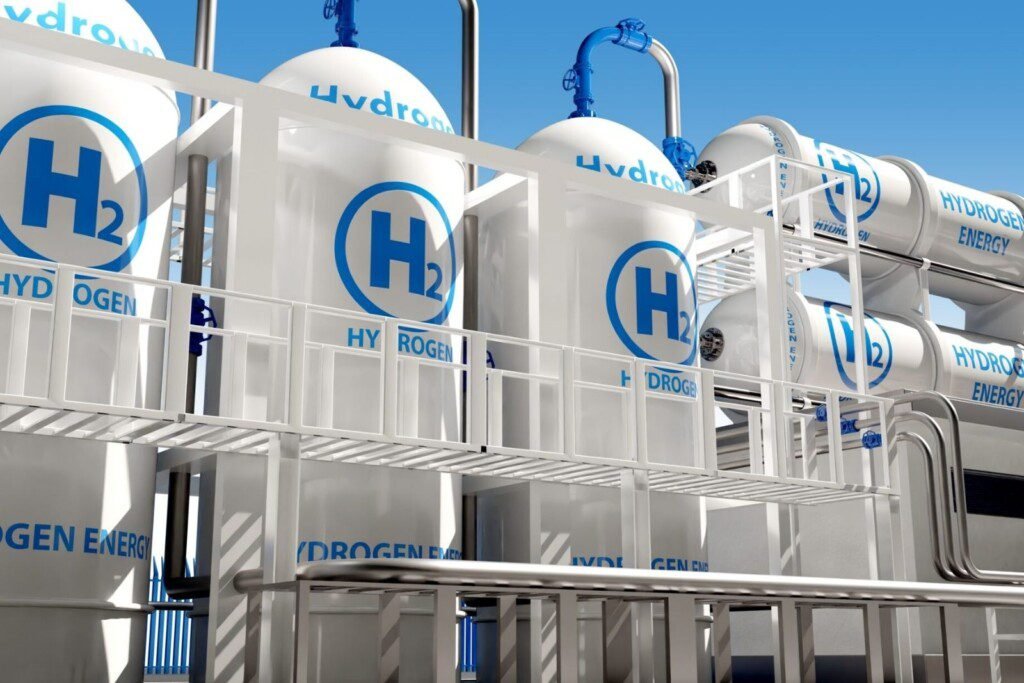
Hydrogen Storage Vessel

Hydrogen Storage Vessel

Introduction

A Hydrogen Storage Vessel is a highly engineered pressure containment system specifically designed for the safe storage, stabilization, and controlled delivery of hydrogen gas. Due to hydrogen’s extremely small molecular size, high diffusivity, embrittlement characteristics, and flammability, these vessels require advanced metallurgy, high-precision fabrication, and rigorous quality controls that exceed the requirements of standard gas storage tanks. Our hydrogen storage vessels are manufactured as per ASME Section VIII Div.1, ISO 11114, PED 2014/68/EU, and EN 13445 standards, ensuring maximum safety, zero leakage, hydrogen compatibility, and long-term structural reliability for industrial, commercial, and energy applications.

What is a Hydrogen Storage Vessel?

A Hydrogen Storage Vessel is a specialized, high-integrity pressure vessel designed to store high-purity hydrogen gas at pressures typically ranging from 30 bar up to 700 bar (and beyond for research applications). These vessels are engineered for extreme safety and performance due to hydrogen’s unique properties.

Applications

  • Hydrogen production plants
  • Hydrogen refueling stations
  • PEM fuel cell systems
  • Hydrogen pipeline buffering
  • Industrial process hydrogen storage
  • Green hydrogen & renewable energy systems

Hydrogen’s unique behavior requires vessels constructed using hydrogen-compatible materials, diffusion-resistant weld procedures, and advanced safety mechanisms that prevent leakage, ignition, or structural failure.

Hydrogen Storage Vessel

Design & Engineering Features

1) Compliance Standards & Codes:

We engineer vessels in accordance with:

  • ASME Section VIII Div.1 / Div.2
  • ISO 11114-1 & ISO 11114-2 (Hydrogen compatibility & material selection)
  • EN 13445 (Unfired Pressure Vessels)
  • PED 2014/68/EU (CE Marking)
  • ISO 9809 (High-pressure gas cylinders — optional)
  • ASME U-Stamp (on request)
  • TP Inspection accepted: TUV, Lloyds, BV, DNV, ABS, SGS
2) Pressure Ratings:
Hydrogen requires specific vessel categories:
  • Low Pressure: 10–30 bar (industrial storage)
  • Medium Pressure: 30–100 bar (PSA hydrogen plant storage)
  • High Pressure: 150–300 bar (fuel cell support systems)
  • Ultra-High Pressure: 350–700 bar (hydrogen mobility & refueling stations)
  • Custom Vessels: 1000+ bar for research or defense applications
3) Temperature Ratings:
Hydrogen service requires materials resistant to hydrogen embrittlement:
  • Standard Temperature: –20°C to +200°C
  • Cryogenic Storage: –253°C (for liquid hydrogen LH₂ on request)
  • High-temperature variants: for reformer-based hydrogen generation
Material of Construction:
Hydrogen-Compatible Metals
  • Low Alloy Steels: SA 372, SA 516 Gr.70
  • Chrome-Moly Steels: SA 302, SA 387 (embrittlement-resistant)
  • Austenitic Stainless Steels: SS304, SS316, SS316L
  • Super Alloys: Inconel (for special applications)
  • Composite Wrapped (Type II, III & IV) vessels:
    • Carbon fiber reinforced polymer
    • Aluminum liners
    • Polymer liners
Hydrogen Embrittlement Resistant Design

All materials comply with ISO hydrogen embrittlement standards:

  • Controlled hardness levels
  • Special PWHT cycles
  • Microstructure refinement
  • Corrosion-resistant weld overlays
  • Diffusion-resistant liner coatings
Types of Hydrogen Storage Vessels :
  • Type I (All-Metal Vessels)
    • Fully steel construction
    • 30–200 bar
    • Heavy-duty industrial applications
  • Type II (Hoop-Wrapped Hybrid)
    • Steel liner + partial composite wrap
    • Weight reduced compared to Type I
    • Medium pressure applications
  • Type III (Full Composite Over Metal Liner)
    • Aluminum liner + full carbon fiber composite wrap
    • 200–450 bar
    • Used in hydrogen stations, fuel cells, mobility
  • Type IV (Composite Vessel with Polymer Liner)
    • Maximum weight reduction
    • Pressures up to 700 bar
    • Ideal for EVs, buses, drones, aerospace
Capacity Range
  • 100 Litres to 80,000 Litres (industrial gas storage)
  • 1–60 m³ PSA buffer vessels
  • Composite tanks: 25–400 L (for mobility/fuel cell)
  • Custom-built larger volumes up to 200 m³
Nozzle & Instrumentation Package:
Standard Nozzles
  • Inlet and Outlet nozzles with isolation valves
  • Safety Relief Valve (SRV) port
  • Pressure gauge / transmitter port
  • Temperature sensor port
  • Drain nozzle (manual / automatic)
  • Vent / Purge nozzle
Instrument Options
  • Pressure gauge / transmitter
  • Digital pressure switch
  • Level indicator (for large vertical receivers)
  • Solenoid valve–based purge system
Coating & Surface Protections

Hydrogen vessels require advanced protection:

  • Internal Electropolishing (SS)
  • Epoxy-phenolic coating (CS vessels)
  • Polymer-lined interiors (Type IV)
  • Hydrogen diffusion barrier coatings
  • External PU / Epoxy paint
  • Grit blasting to SA 2.5
Quality Control & Testing:
Mandatory Tests
  • Hydrostatic Testing (1.3 to 1.5 × design pressure)
  • Pneumatic Testing with Nitrogen/Hydrogen (as per safety norms)
  • Helium leak test (Mass Spectrometer)
  • Hydrogen permeability test
  • Vacuum test (if required)
NDT Methods
  • 100% Radiographic Testing (RT)
  • Ultrasonic Testing (UT)
  • Magnetic Particle Inspection (MPI)
  • Dye Penetrant Test (DPT)
  • Hardness & Microstructure evaluation
Documentation Package
  • MTC (EN 10204 3.1)
  • WPS/PQR/WPQ
  • Hydro test certification
  • Helium leak test report
  • Data sheet + GA drawing
  • Third-party certificates
Functional Advantages:
  1. Ultra-Safe Hydrogen Storage: Engineered to prevent micro-cracks, hydrogen diffusion, and structural fatigue.
  2. High Structural Integrity: Welds are tested using UT, RT, MPI, and X-ray to ensure absolute integrity.
  3. Zero Leak Technology: All vessels maintain helium/hydrogen leak tightness at extremely low ppm levels.
  4. Energy Optimization: Supports hydrogen generators, electrolyzers, and fuel cell systems with stabilized flow.
  5. High Durability: Corrosion-protected, embrittlement-resistant designs ensure decades-long operations.
  6. Versatile Configurations: Vertical, horizontal, underground, skid-mounted, containerized or modular.
Industries & Applications:
  • Hydrogen refueling stations (350–700 bar)
  • PEM fuel cell power systems
  • Electrolyzer-based green hydrogen plants
  • Oil & Gas hydrogen blending systems
  • Chemical processing
  • Steel manufacturing (DRI plants)
  • Semiconductor/PV industries
  • Aerospace & defense
  • Cryogenic hydrogen storage
  • Hydrogen mobility (cars, buses, forklifts, drones)
Why Choose Our Hydrogen Storage Vessels?
  • Deep expertise in high-pressure ASME/API pressure vessels
  • Experience up to 700 bar composite hydrogen designs
  • State-of-the-art fabrication & NDT testing
  • Zero-leak guarantee with helium mass spectrometry
  • Advanced engineering support (FEA, fatigue design, CFD on request)
  • Custom, project-specific vessel engineering
  • Fast delivery for industrial projects
  • Global supply footprint (India, GCC, Africa, SE Asia, Europe)
Nitrogen Receiver LPG Storage Vessel
Ready to Discuss Your Hydrogen Storage Vessel Requirements?

Contact our engineering team for custom solutions and quotations.

WhatsApp Email