Nordstone Team
Professional Writers
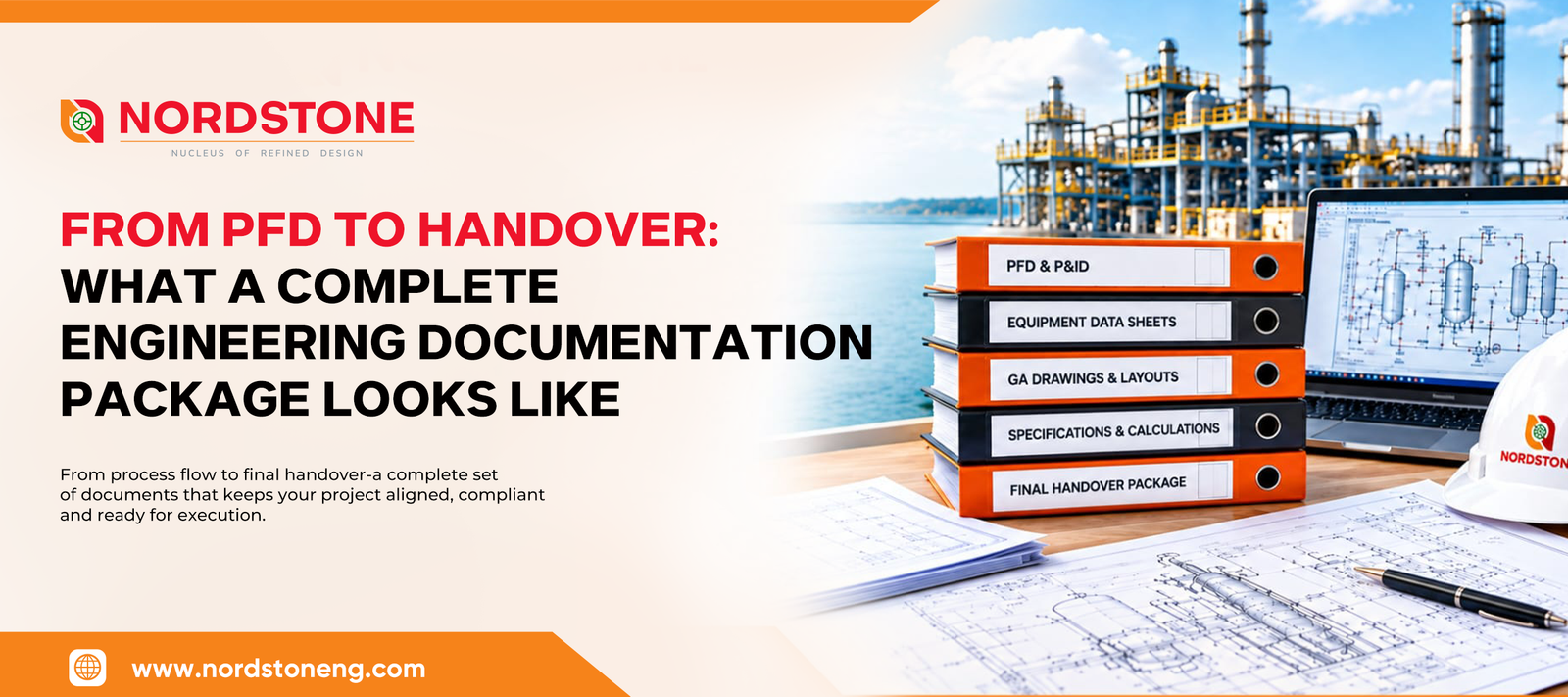
From PFD to Handover: What a Complete Engineering Documentation Package Looks Like
Engineering documentation is the backbone of every industrial project. Whether you are building a refinery, a pharmaceutical plant, a data center, or a food processing facility, the documentation package tells the full story of the design—from the first concept sketch to the final handover file.
A missing document can delay commissioning by weeks. An outdated drawing can cause costly rework. A poorly organized handover package can haunt operations for years.
This guide walks you through what a complete engineering documentation package looks like, stage by stage, from the very first Process Flow Diagram (PFD) all the way to project handover.
Why the Documentation Package Matters
Before diving into the documents, it helps to understand why this package is critical:
- Design Clarity: Every stakeholder—process, mechanical, electrical, instrumentation, civil—works from the same reference.
- Constructability: Contractors build from issued drawings. Errors here become physical errors in the field.
- Compliance: Regulatory bodies, insurers, and auditors require traceable documentation.
- Operations & Maintenance: The end user needs accurate records to run, maintain, and modify the facility safely.
- Handover & Closeout: A well-structured package ensures a smooth transition from construction to operations.
In short, documentation is not paperwork. It is the product of engineering.
1 Conceptual & Feasibility Documents
At the earliest stage, the goal is to define what the facility will do and whether it is viable.
Key deliverables:
- ▸ Block Flow Diagram (BFD): A simplified overview showing major process blocks and material flows.
- ▸ Process Flow Diagram (PFD): The foundational document showing process streams, operating conditions (temperature, pressure, flow), and major equipment.
- ▸ Heat and Material Balance (HMB): Quantifies flow rates, compositions, and energy across the process.
- ▸ Feasibility Study Report: Covers scope, cost estimates, and technical viability.
- ▸ Design Basis Memorandum (DBM): Defines design criteria, codes, standards, and assumptions.
The PFD is often considered the birth certificate of the project. Everything downstream references it.
2 Basic Engineering (Front-End Engineering Design – FEED)
This stage converts concept into a defined design. Deliverables become more detailed and discipline-specific.
Process deliverables:
- • Updated PFDs
- • Utility Flow Diagrams (UFDs)
- • Piping and Instrumentation Diagrams (P&IDs) – first issue
- • Equipment Process Data Sheets
- • Line List (preliminary)
- • Cause & Effect Matrix (preliminary)
Mechanical deliverables:
- • Equipment Lists
- • Mechanical Data Sheets
- • Vendor inquiry packages
Electrical & Instrumentation:
- • Single Line Diagrams (SLDs)
- • Instrument Index (preliminary)
- • I/O List (preliminary)
- • Control Philosophy document
Civil & Structural:
- • Plot Plan
- • General Arrangement (GA) drawings
- • Soil investigation reports
The FEED package is the foundation of detailed engineering. Weak FEED usually means expensive changes later.
3 Detailed Engineering
This is where the bulk of documentation is produced. Every discipline issues drawings, calculations, and specifications that contractors will build from.
Process:
- • Final PFDs and P&IDs (IFC – Issued for Construction)
- • Hydraulic calculations
- • Relief and flare load studies
- • Safety shower and eyewash layouts
- • Material Selection Diagrams
Mechanical:
- • Equipment GA drawings
- • Fabrication drawings
- • Nozzle orientation drawings
- • Vendor document review (VDR) records
- • Welding and NDT specifications
Piping:
- • Piping General Arrangement drawings
- • Isometric drawings
- • Pipe Support drawings
- • Material Take-Off (MTO)
- • Piping Line List (final)
- • Piping Material Specifications (PMS)
Electrical:
- • Load List
- • Cable Schedule
- • Cable Tray and Routing Layouts
- • Earthing and Lightning Protection drawings
- • Lighting Layouts
- • Substation and Switchgear drawings
Instrumentation & Control:
- • Instrument Index (final)
- • I/O List (final)
- • Instrument Data Sheets
- • Loop Diagrams
- • Junction Box and Cable Schedules
- • Cause & Effect Matrix (final)
- • Control System Architecture
- • Logic Diagrams
- • Hook-up Drawings
Civil & Structural:
- • Foundation drawings
- • Structural steel drawings
- • Architectural layouts
- • Drainage and paving drawings
- • Reinforcement details
HSE (Health, Safety & Environment):
- • Hazardous Area Classification drawings
- • Fire Protection layouts
- • Safety Studies (HAZOP, SIL, QRA)
- • Escape and Evacuation routes
At this stage, document control becomes mission-critical. Revision tracking, transmittals, and approval workflows must be airtight.
4 Procurement & Vendor Documentation
Every piece of equipment comes with its own documentation package from the vendor. These must be reviewed, approved, and integrated.
Typical vendor deliverables:
- • Equipment Data Sheets
- • Shop Fabrication Drawings
- • Installation, Operation & Maintenance (IOM) Manuals
- • Test Certificates (FAT/SAT)
- • Material Certificates
- • Spare Parts Lists
- • Warranty Documents
- • As-Built Vendor Drawings
These documents feed directly into the final handover package.
5 Construction & As-Built Documentation
During construction, drawings change. The goal is to capture every change and produce accurate as-built records.
Key deliverables:
- • Red-line Markups (field changes)
- • As-Built P&IDs
- • As-Built Isometrics
- • As-Built GA Drawings
- • As-Built Electrical & Instrumentation Drawings
- • Site Instruction Records
- • Non-Conformance Reports (NCRs)
- • Inspection and Test Plans (ITPs)
- • Punch List (Category A, B, C)
- • Mechanical Completion Certificates
As-built documents are the single source of truth for future maintenance and modifications.
6 Pre-Commissioning & Commissioning Documentation
Before handover, the facility must be tested, energized, and proven safe.
Key deliverables:
- • Commissioning Procedures
- • Pre-Commissioning Checklists
- • Loop Check Records
- • Functional Test Records
- • Equipment Run-In Reports
- • Safety System Verification Records
- • Performance Test Reports
- • Punch List Closeout Records
Commissioning documents prove that the facility works as designed.
7 Handover Documentation Package
This is the final deliverable—the complete record handed to the owner/operator. A well-organized handover package is often divided into volumes.
Volume 1 – General
- • Project Overview
- • Scope of Work
- • Design Basis
- • Codes and Standards
Volume 2 – Process
- • PFDs (As-Built)
- • P&IDs (As-Built)
- • Heat & Material Balance
- • Process Data Sheets
Volume 3 – Mechanical
- • Equipment Data Sheets
- • Vendor Manuals (IOM)
- • Spare Parts Lists
- • Test Certificates
Volume 4 – Piping
- • Piping GA Drawings
- • Isometrics (As-Built)
- • Line Lists
- • Pipe Support Drawings
- • MTOs
Volume 5 – Electrical
- • SLDs
- • Cable Schedules
- • Layouts
- • Load Lists
Volume 6 – Instrumentation & Control
- • Instrument Index
- • I/O Lists
- • Loop Diagrams
- • Cause & Effect Matrix
- • Control System Manuals
Volume 7 – Civil & Structural
- • Foundation Drawings
- • Structural Drawings
- • Architectural Layouts
Volume 8 – HSE
- • HAZOP Reports
- • Fire Protection Drawings
- • Safety Studies
- • Environmental Reports
Volume 9 – Commissioning & Closeout
- • Commissioning Records
- • Test Reports
- • Punch List Closeout
- • Mechanical Completion Certificates
- • Final Acceptance Certificate
Volume 10 – Warranty & Spares
- • Warranty Documents
- • Recommended Spare Parts
- • Vendor Contacts
Best Practices for a Complete Documentation Package
- 1. Use a Document Control System (EDMS): Tools like Aconex, SharePoint, or Documentum keep revisions traceable.
- 2. Standardize Numbering: Consistent document numbering saves hours during handover.
- 3. Enforce Revision Control: Never issue a drawing without a revision code and approval.
- 4. Cross-Check Disciplines: A P&ID must match the instrument index, cable schedule, and line list.
- 5. Plan Handover Early: Do not wait until the end. Build the handover structure from day one.
- 6. Go Digital Where Possible: Searchable PDFs and indexed folders improve usability.
- 7. Include a Master Document Register (MDR): This is the index of every document in the package.
Common Pitfalls to Avoid
- Missing as-built markups from the field
- Vendor documents never reviewed or approved
- Outdated P&IDs in the handover package
- No Cause & Effect Matrix updates after changes
- Punch list items not formally closed
- Inconsistent document numbering across disciplines
Avoiding these saves months of operational confusion.
Final Thoughts
A complete engineering documentation package is more than a stack of drawings. It is the technical memory of the project. From the first PFD to the final handover certificate, every document plays a role in safety, compliance, and operational success.
Whether you are an EPC contractor, a consultant, or an owner/operator, investing in a structured documentation process pays dividends long after the project is complete.
Build it right. Document it well. Hand it over with confidence.