Nordstone Team
Professional Writers
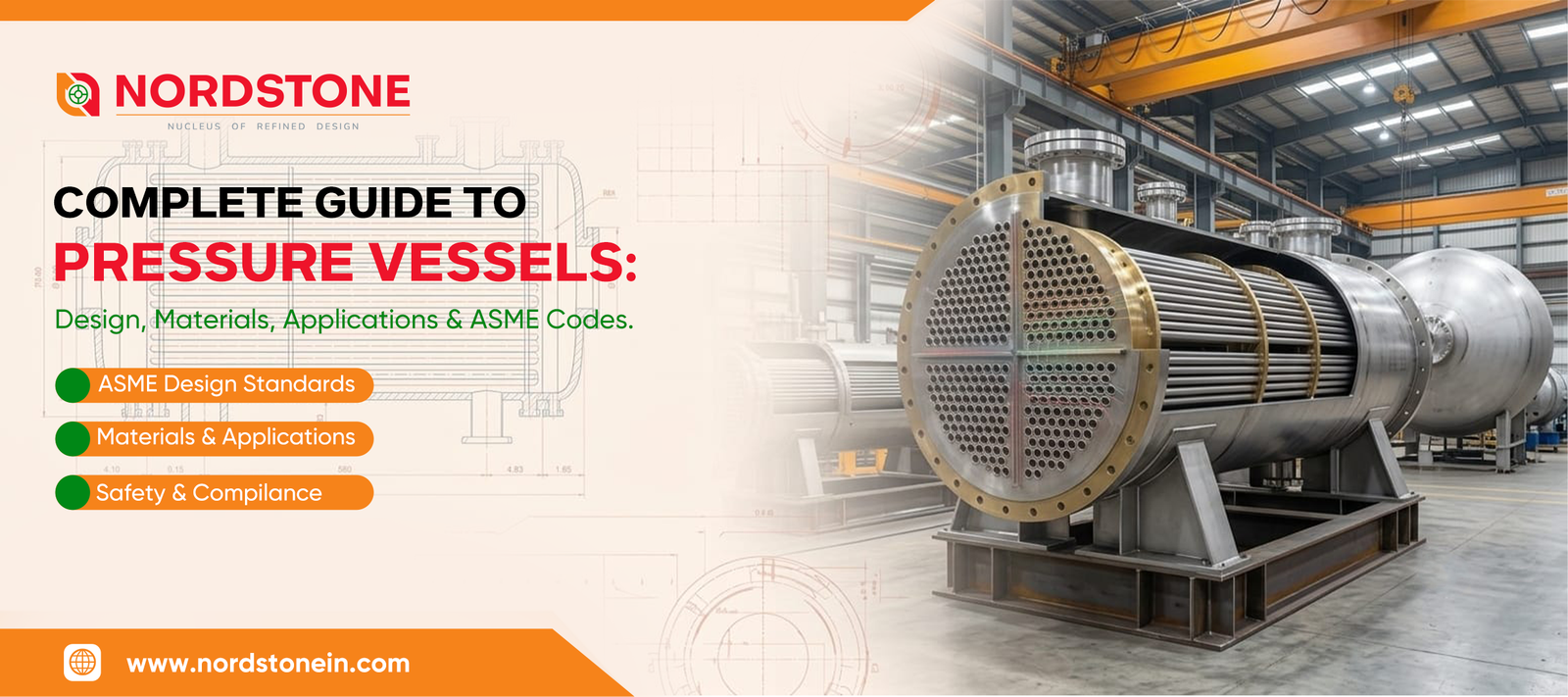
Complete Guide to Pressure Vessels: Design, Materials, Applications & ASME Codes
Pressure vessels are the unsung workhorses of heavy industry. From LPG storage tanks in oil refineries to sterile reactors in pharmaceutical plants, these engineered containers silently handle some of the most demanding conditions on earth — extreme pressures, corrosive chemicals, and temperature swings that would destroy conventional equipment.
Whether you're an engineer sourcing ASME-certified pressure vessels, a procurement manager evaluating fabrication standards, or simply researching industrial pressure vessel design, this guide covers everything you need to know.
What Is a Pressure Vessel?
A pressure vessel is a closed, leak-tight container designed to hold fluids (liquids or gases) at pressures substantially higher or lower than the surrounding atmosphere. Unlike standard storage tanks, pressure vessels are engineered to withstand:
- Internal and external pressure differentials
- High and low temperature extremes
- Mechanical stress and fatigue
- Corrosion from aggressive media
They are governed by strict international codes such as the ASME Boiler and Pressure Vessel Code (BPVC), ensuring they perform safely throughout their operational life.
Types of Pressure Vessels
1. Storage Pressure Vessels Used to store pressurized gases such as LPG, nitrogen, oxygen, and ammonia in bulk quantities. Common in petrochemical plants and gas distribution terminals.
2. Heat Exchangers Designed to transfer thermal energy between two fluid streams without mixing them. Widely used in oil refineries, power plants, and HVAC systems.
3. Process Vessels (Reactors) Support chemical reactions, mixing, distillation, and separation under controlled pressure. Critical in chemical, pharmaceutical, and specialty chemical industries.
4. Boilers Generate steam under pressure for power generation, heating systems, and industrial processes. Subject to IBR (Indian Boiler Regulations) in India.
5. Separators Used in oil and gas production to separate crude oil, water, and gas from wellhead streams.
Shapes and Configurations
| Shape | Benefit | Best Use |
| Cylindrical | Easy to manufacture, cost-effective | Most industrial applications |
| Spherical | Maximum strength, lowest wall stress | LPG bullets, cryogenic tanks |
| Conical / Custom | Space-efficient transitions | Distillation columns, headers |
Cylindrical vessels with hemispherical or ellipsoidal heads dominate the market due to their balance of structural efficiency and ease of fabrication.
Materials of Construction
Material choice directly impacts pressure vessel performance, longevity, and compliance. Common materials include:
- Carbon Steel (SA-516) — Most economical; ideal for moderate temperatures and non-corrosive media
- Stainless Steel (304/316L) — Excellent corrosion resistance; preferred for food, pharma, and chemical applications
- Alloy Steel (Chrome-Moly) — High-temperature, high-pressure service in refineries and power plants
- Duplex / Super Duplex Steel — Superior resistance to chloride stress corrosion cracking
- Composite / FRP — Lightweight option for corrosive, low-pressure environments
Industrial Applications (expanded for long-tail keywords)
Pressure vessels serve critical functions across virtually every process industry:
- Oil & Gas — Separators, scrubbers, pig launchers, storage bullets
- Chemical Processing — Reactors, columns, autoclaves, jacketed vessels
- Power Generation — Steam drums, feed water heaters, condensers
- Pharmaceuticals — Sterile storage tanks, autoclaves, CIP vessels
- Food & Beverage — Fermentation tanks, pasteurization vessels, carbonation tanks
- Cryogenics — Liquid nitrogen and oxygen storage dewars
- Water Treatment — Pressure filters, membrane housings
Pressure Vessel Design & Safety Standards
Safety is non-negotiable in pressure vessel engineering. Every vessel must comply with applicable codes before it enters service.
Key International Standards:
- ASME Section VIII Div. 1 & 2 — The global benchmark for pressure vessel design and fabrication
- PED 2014/68/EU — European Pressure Equipment Directive
- ISO 16528 — General requirements for boilers and pressure vessels
Critical Design Parameters Every Buyer Should Know:
- ✔ Wall thickness calculations (per ASME / IBR)
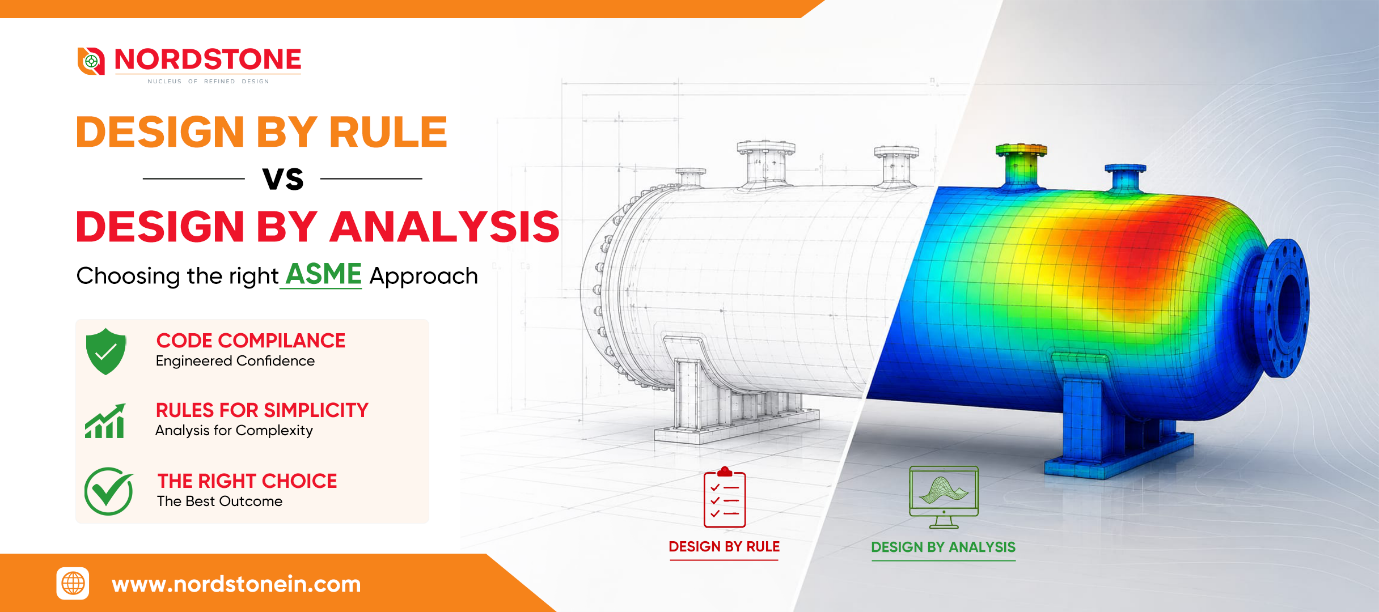
- ✔ Stress analysis and finite element methods (FEM)
- ✔ Corrosion allowance (typically 1.5–3mm for carbon steel)
- ✔ Nozzle reinforcement design
- ✔ Weld joint efficiency and NDE requirements
- ✔ Hydrostatic and pneumatic pressure testing
Key Insight: Undersized corrosion allowance is one of the most common reasons for premature pressure vessel failure. Always work with a certified fabricator who performs thorough thickness calculations.
Pressure Vessel Safety: What Can Go Wrong?
Pressure vessels store enormous amounts of energy. A failure — whether from design error, material defect, or poor maintenance — can be catastrophic.
Common failure modes:
- Brittle fracture from low-temperature service without proper material selection
- Stress corrosion cracking in chloride-rich environments
- Fatigue failure from cyclic loading
- Hydrogen embrittlement in refinery service
Prevention requires:
- Regular in-service inspection by a qualified inspector
- Non-Destructive Testing (NDT): RT, UT, MT, PT
- Calibrated pressure relief valves (PRVs) tested annually
- Documented preventive maintenance programs
FAQ Section
Q1: What is the difference between a pressure vessel and a storage tank? A pressure vessel is designed and certified to operate at internal pressures greater than 15 psi (1.03 bar). Standard storage tanks operate at or near atmospheric pressure. Pressure vessels require mandatory third-party inspection and certification under ASME or equivalent codes.
Q2: What ASME certification should a pressure vessel have? Most industrial pressure vessels require ASME Section VIII Division 1 or Division 2 certification, indicated by the ASME "U" or "U2" stamp. The stamp confirms the vessel was designed, fabricated, and inspected according to the ASME BPVC.
Q3: How long do pressure vessels last? A well-designed, properly maintained pressure vessel typically lasts 20 to 30 years. Lifespan depends on material selection, operating conditions, corrosion allowance, and adherence to inspection schedules.
Q4: How often should pressure vessels be inspected? As per most regulatory frameworks (including IBR and ASME), pressure vessels should undergo external inspection annually and internal inspection every 2 to 5 years, depending on service conditions and jurisdiction.
Q5: What is the cost of a pressure vessel? Pressure vessel cost varies widely based on size, material, design pressure, and certification requirements. Small carbon steel vessels may start from ₹2–5 lakhs, while large, high-alloy vessels for refinery use can cost several crores. Contact us for a project-specific quotation.