
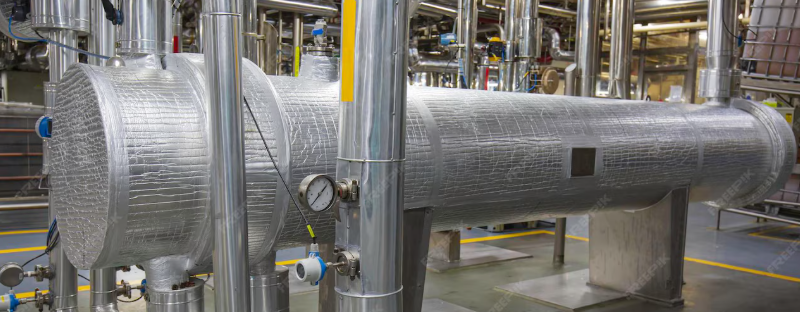
Shell & Tube Heat Exchangers in Germany
Across Germany's industrial landscape — from BASF Ludwigshafen Verbund chemical complex and specialty chemicals to Volkswagen, BMW, and Mercedes-Benz automotive process utilities and paint shop systems — the Shell & Tube Heat Exchangers is a foundational equipment selection, built to transfer heat between process fluid streams through tube bundles in cylindrical shells at any industrial scale while meeting the engineering expectations of Germany's Energiewende energy transition, hydrogen Hochlauf, and Mittelstand industrial decarbonization. Every Shell & Tube Heat Exchangers destined for Germany is engineered and certified to AD 2000 Merkblätter, EN 13445, DGRL (PED), TÜV/DEKRA inspection, DIN standards, providing BAM (Bundesanstalt für Materialforschung), TÜV Rheinland, and DGUV German workers compensation inspection with the inspection documentation required for pressure equipment commissioning approval. To withstand Central European temperate climate with cold winter temperature requirements for low-temperature material certification, the Shell & Tube Heat Exchangers is constructed from carbon steel, admiralty brass, titanium Gr.2, duplex 2205, 316L, Hastelloy C-276 per service corrosivity, providing the corrosion resistance and mechanical performance required for reliable long-term service in Germany.
From crude distillation feed-effluent exchanger and product cooler heat recovery train in Germany's BASF Ludwigshafen Verbund chemical complex and specialty chemicals to amine lean-rich heat exchanger and overhead condenser in gas treating and CO₂ capture plants supporting Volkswagen, BMW, and Mercedes-Benz automotive process utilities and paint shop systems and Bayer, LANXESS, and Covestro specialty chemical and polymer manufacturing production, the Shell & Tube Heat Exchangers delivers consistent performance across all priority industrial sectors. Major Germany operators such as BASF, Bayer, Wacker Chemie, and Evonik Industries rely on the Shell & Tube Heat Exchangers at TEMA R, C, B class with fixed tubesheet, U-tube, floating head, kettle in 0.1 to 2,000+ m² heat transfer area to support the operational demands of their flagship industrial facilities and expansion projects. HTRI Bell-Delaware shell-side optimization and flow-induced vibration analysis preventing tube bundle failure distinguishes Nord's Shell & Tube Heat Exchangers from standard alternatives, providing Germany's process engineers with an advanced technical solution backed by TEMA, ASME VIII Division 1, EN 13445, and HTRI validated thermal performance calculation certification and third-party inspection.
Nord supplies Germany customers with complete engineering documentation — including design calculations, weld maps, NDE records, pressure test certificates, and inspection dossiers — fully compliant with BAM (Bundesanstalt für Materialforschung), TÜV Rheinland, and DGUV German workers compensation inspection standards.