
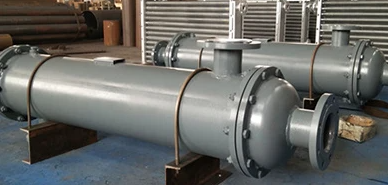
Evaporator in Poland
Poland's rapidly expanding PKN Orlen Płock refinery and Lotos Gdańsk refinery integration and petrochemical and KGHM Polska Miedź copper mining and smelting process utilities at Głogów sectors rely on the Evaporator to concentrate liquid solutions or recover vapor through controlled thermal energy application, with every unit engineered specifically for the Central European continental cold winter requiring low-temperature material certification, moderate summer encountered across the country's industrial heartland. Compliance with EN 13445, PED 2014/68/EU, PKN (Polish Committee for Standardization), TDT inspection is built into every Evaporator supplied to Poland, satisfying the certification requirements of TDT (Technical Inspection Office / Urząd Dozoru Technicznego) Polish pressure equipment inspection authority and enabling statutory inspection registration. Engineered for Central European continental cold winter requiring low-temperature material certification, moderate summer specific to Poland's industrial zones, the Evaporator is fabricated from 316L stainless steel for food and pharma, Hastelloy C-276 for acid concentrators, titanium for seawater service, ensuring structural integrity and performance consistency throughout its design service life.
Poland's PKN Orlen Płock refinery and Lotos Gdańsk refinery integration and petrochemical sector applies the Evaporator specifically for dairy, juice, and pharmaceutical product concentration with minimal thermal product degradation, complemented by its critical role in industrial wastewater zero liquid discharge concentration for solid waste minimization across the KGHM Polska Miedź copper mining and smelting process utilities at Głogów and PGNiG gas storage and LNG regasification at Świnoujście terminal segments. Major Poland operators such as PKN Orlen, KGHM, PGNiG, and Synthos Chemical rely on the Evaporator at falling film, rising film, forced circulation, plate, and MVR types for specific viscosity and fouling duty to support the operational demands of their flagship industrial facilities and expansion projects. Poland operators benefit from MVR energy recovery achieving up to 30 kg water evaporated per kg steam consumed at lowest energy cost, a Nord engineering advantage rooted in strict adherence to ASME VIII Division 1, EN 13445, and FDA/EHEDG/3-A Sanitary Standards for food-grade and independently verified by authorized inspection body documentation.
Nord's commitment to Poland's industrial operators includes full documentation packages covering statutory design approvals, material certifications, inspection dossiers, and commissioning support — all accepted by TDT (Technical Inspection Office / Urząd Dozoru Technicznego) Polish pressure equipment inspection authority.